

Blog · July 2, 2026
Donate Furniture Pickup Options Explained
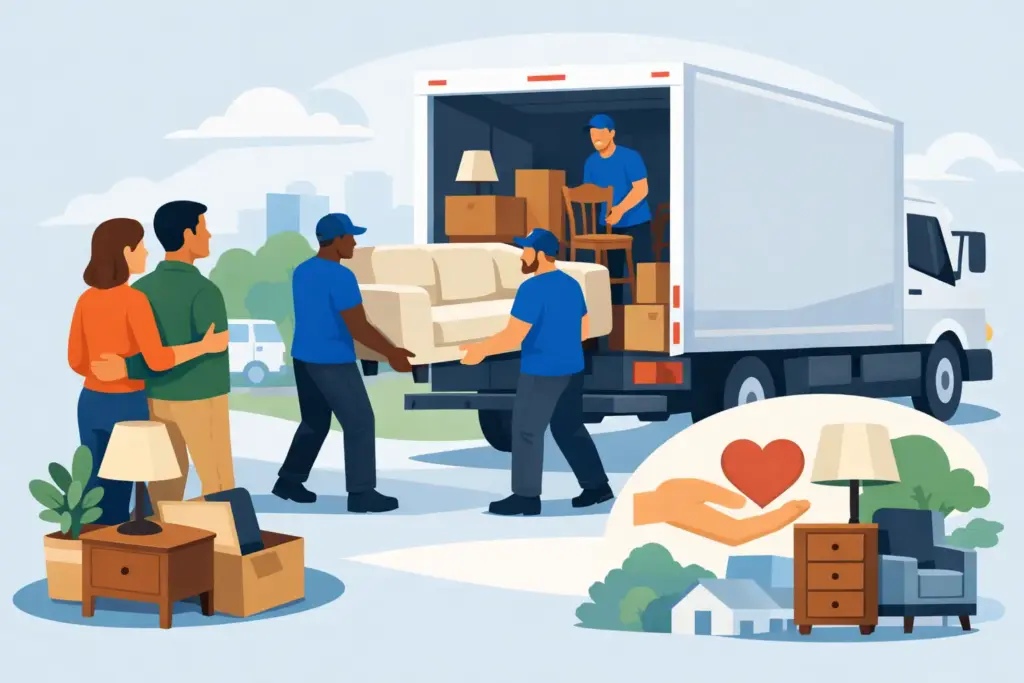
That old couch in the bonus room is not getting any more useful by sitting there another month. If you’re looking into donate furniture pickup options, the real question is usually not, “Can I give this away?” It’s, “Who will actually come get it without turning this into a part-time job?”
Furniture donation sounds simple until you start making calls. Some groups only take certain items. Some need photos first. Some offer free pickup, but only if your pieces are in strong condition and fit their route. Others are not really donation services at all – they are hauling companies that will remove usable items and try to keep them out of the landfill when possible. That difference matters, especially when you need the furniture gone fast.
How donate furniture pickup options usually work
Most pickup options fall into three lanes. You have charities that accept gently used furniture, local nonprofits or church-run programs with limited pickup capacity, and junk removal companies that handle the heavy lifting and sort for donation or recycling when items qualify.
Charities are usually the first stop if your furniture is clean, sturdy, and ready for a second home. Think sofas without rips, dressers with working drawers, dining tables with stable legs, and bed frames with all their parts. If the item looks like someone would actually want it in their house tomorrow, you have a better shot.
The catch is scheduling. Donation organizations often run on tight routes, small crews, and item restrictions. That means pickup windows may be days or weeks out. If you’re clearing a home for a move, a sale, or a turnover, that timeline can be a dealbreaker.
Local nonprofits can be a great option, but availability varies a lot. Some only serve specific neighborhoods. Some only pick up on certain days. Some rely on volunteers, which means service can be less predictable. If you’ve got flexibility, this route can work well. If you need the furniture gone by Friday, maybe not.
Then there are hauling services. These are often the practical answer when the furniture is bulky, upstairs, mixed in with other junk, or tied to a deadline. A good removal team can haul it out quickly and identify what may still be suitable for donation. You pay for the labor and removal, but you skip the wrestling match with stairs, trucks, and no-show pickup windows.
What makes furniture donation-worthy
Not every old recliner is one more chance at generosity. A lot of furniture gets rejected because it is too damaged, too stained, too outdated, or too risky to reuse.
The best candidates for donation are items that are structurally solid, reasonably clean, and safe to handle. Minor wear is usually fine. Heavy odors, pet damage, broken frames, cracked glass, mold, bed bugs, or deep stains are usually a hard no. Mattresses can be especially tricky because many organizations will not accept them at all.
This is where people get frustrated. They hear “furniture pickup” and assume that means any furniture. It usually doesn’t. Donation pickup is based on whether the item can be resold or directly reused, not just whether you want it gone.
If you’re not sure, take a hard look at it like a stranger would. Would you feel good giving it to a friend? Would someone else reasonably put it in their living room, bedroom, or office? If the answer is no, you’re probably looking at removal instead of donation.
Free pickup sounds great, but it comes with strings
Free donation pickup is real, but it is not unlimited. Organizations have to protect staff time, truck space, and disposal costs. If they show up for furniture that turns out to be unusable, they lose money fast.
That is why many pickup programs ask detailed questions or request photos in advance. They want to confirm condition, dimensions, and access. A second-floor sleeper sofa with a narrow stairwell is a very different job than a clean nightstand waiting in the garage.
Some groups also require enough volume to make the trip worth it. One small chair may not qualify, while a full bedroom set might. Others bundle pickup areas by zip code or neighborhood, so your location can affect availability.
For homeowners and landlords, this is where timing and convenience start to outweigh the idea of “free.” Saving a pickup fee does not always save time, stress, or labor.
When a junk removal company makes more sense
If your furniture has to go now, donate furniture pickup options through a hauling service can be the smoother play. This is especially true when the job involves multiple pieces, difficult access, or a property that needs to be cleared in one shot.
Say you’re cleaning out a rental after a tenant move-out. Maybe one dresser is usable, the couch is questionable, and there’s also a busted table, bagged trash, and an old mattress in the mix. A charity pickup is not built for that kind of load. A removal crew is.
The same goes for estate cleanouts, foreclosure work, renovation prep, and garage or basement clearouts. In those cases, you usually need a team that can sort on-site, lift safely, and get everything off the property without a dozen separate appointments.
A company like Junk Punk fits that middle ground well. If an item is in good enough shape to donate, great. If not, it still gets removed without you having to drag it to the curb and hope for the best. That’s the practical side of responsible hauling – keeping usable items in circulation when possible, while still getting the job done.
Questions to ask before you book pickup
A little screening upfront can save you a lot of back-and-forth. Whether you’re calling a nonprofit or a hauling company, ask what items they accept, how soon they can come out, and whether there are extra charges for stairs, long carries, or oversized pieces.
It also helps to ask what condition standards they use. “Used” and “accepted” are not the same thing. You should also confirm whether they need photos ahead of time and whether you need to move anything outside before pickup.
If your main goal is donation, ask directly what happens if the crew decides an item is not acceptable once they arrive. Some groups will leave it behind. Some haulers can still remove it for a fee. Better to know before you’re standing in the driveway with a couch and a bad mood.
Best furniture types for pickup donation
The easiest pieces to donate are usually dressers, nightstands, side tables, dining tables, chairs, coffee tables, and bookshelves that are clean and stable. Sofas and loveseats can be accepted too, but upholstery condition matters a lot. If it smells like the family dog ran the place, expect trouble.
Bed frames and headboards are often acceptable if all hardware is included. Desks and office furniture can also do well, especially if they are simple and functional. Children’s furniture may be accepted, but safety standards can make some organizations cautious.
Large entertainment centers, damaged particle-board furniture, and heavily worn recliners tend to be harder to place. So do older mattresses and box springs. Those items often end up in the removal category even when the owner hoped for donation.
How to make pickup easier and avoid rejection
Clean the furniture first. Not deep restoration, just basic respect. Wipe it down, remove personal items from drawers, and vacuum crumbs out of cushions. If there are detachable parts, bag the hardware and tape it securely to the item.
Take clear photos in good lighting. Show the full piece, not artistic close-ups of one decent corner. If there is damage, mention it. A straight answer early is better than a canceled pickup later.
Measure doorways and hallways if the furniture is in a tight space. Pickup crews hate surprises, and honestly, so do customers. If a crew has to wrestle a giant sectional down a narrow staircase, that can affect whether the item gets removed at all and whether extra labor charges apply.
Local reality: speed matters more than theory
Around Charlotte and nearby towns, people usually start with the donation idea and end with the convenience decision. That is not being lazy. That is being realistic. Between work, kids, property deadlines, and the fact that furniture is heavy enough to ruin your Saturday, convenience wins a lot.
The smartest move is to match the pickup option to the actual condition of the item and the urgency of the job. If you’ve got beautiful, reusable furniture and time to coordinate, a donation charity may be perfect. If you’ve got a mixed pile and a deadline breathing down your neck, a hauling service is often the better call.
Good furniture should get a second life when it can. Bad furniture should still leave without wrecking your schedule. That’s really the whole game.
If you’re staring at a bulky piece that’s too good for the dump but too annoying to move yourself, don’t overcomplicate it. Start with honesty about the condition, choose the pickup route that fits your timeline, and let somebody else do the heavy lifting.