

Blog · July 9, 2026
How Does Junk Removal Work?
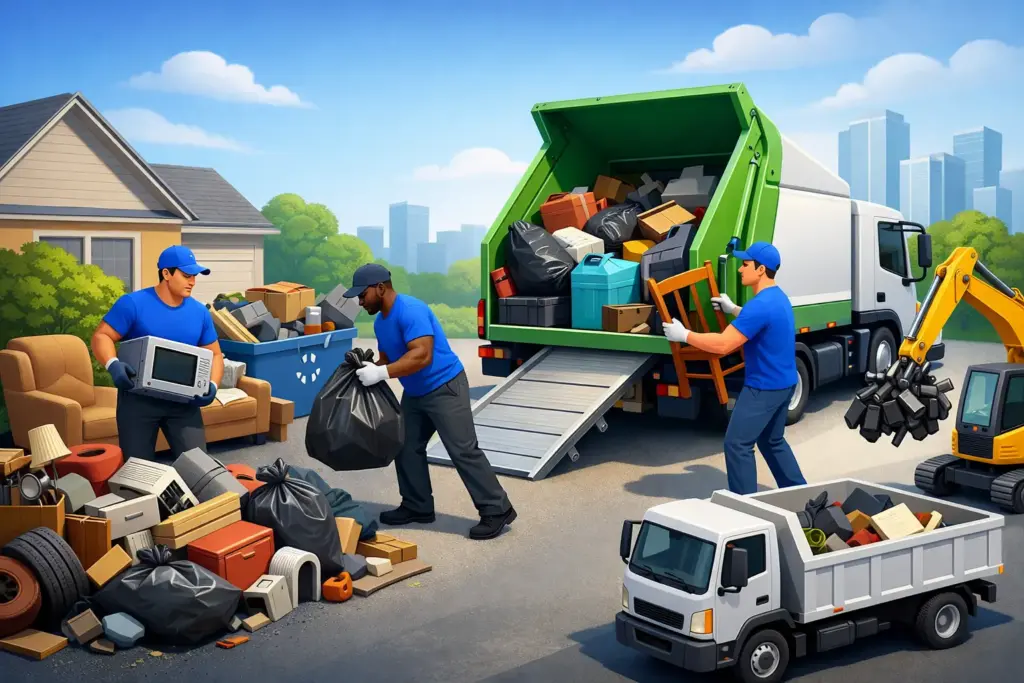
That old couch in the garage usually starts as a “deal with it later” problem. Then later turns into six months, a bruised shin, and a car that still can’t fit where it’s supposed to. If you’ve been wondering how does junk removal work, the short answer is simple: you book a pickup, get a price, point to the stuff, and a crew hauls it away. The real answer is a little more useful than that, especially if you want to avoid surprise fees, wasted time, or a mountain of junk that somehow keeps growing.
How does junk removal work from start to finish?
Most junk removal jobs follow the same basic flow, whether you’re clearing out one mattress or dealing with a full property cleanout. You reach out by phone, text, or online booking. In some cases, you can also send photos for a rough quote, which is handy when you want a fast ballpark without playing phone tag.
Once your appointment is set, the crew shows up during the scheduled window, takes a look at what needs to go, and confirms the final price before any hauling starts. That part matters. Good junk removal companies don’t just start tossing things into a truck and hand you a mystery invoice later. They explain the price upfront, usually based on how much space your items take in the truck, plus any added labor if the job is extra heavy, hard to access, or requires more work than a standard curbside pickup.
After you approve the quote, the crew does the lifting, loading, and cleanup. You point, they haul. Then the company sorts what can be donated, recycled, or disposed of properly. That’s the basic machine. No rented dumpster in your driveway. No begging a friend with a pickup truck. No figuring out whether the landfill takes old TVs on Tuesdays only.
What happens when you book a junk pickup?
The booking step is usually easier than people expect. For a single item or a small pile, a photo and a few details may be enough to get a pretty accurate estimate. For bigger jobs like foreclosure cleanouts, garage cleanouts, eviction trash-outs, or construction debris, the company may want to see the job in person before locking in the full price.
You’ll usually be asked a few practical questions: What needs to go? How much is there? Is it inside or outside? Are there stairs? Is anything especially heavy, like an old piano, hot tub, or loaded-down sleeper sofa that weighs about as much as a small moon?
Those details are not just small talk. They affect crew size, truck space, job timing, and price. A pile of brush by the curb is a different animal than a third-floor apartment cleanout with no elevator. Same junk category, very different sweat level.
On the day of service, most crews call or text when they’re on the way. That helps if you’re juggling work, kids, contractors, or a tenant move-out. The goal is simple: less waiting around, more getting stuff gone.
How pricing usually works
This is where people get nervous, and fair enough. Nobody wants to hear “affordable” on the phone and “actually…” in the driveway.
Most junk removal companies price by volume, by item, or by a mix of both. Volume-based pricing means you’re paying for how much of the truck your junk fills up. If your load takes up one-quarter of the truck, you pay less than someone filling the whole thing. This works well for furniture, mixed household clutter, garage junk, and renovation debris.
Per-item pricing is common for things like mattresses, appliances, or a single couch. It’s straightforward and easy to understand. Some companies use per-item pricing for simple pickups and switch to volume pricing when the load is larger or mixed.
Then there are labor-related charges. These are not always a red flag. Sometimes they are the only honest way to price a job. If a crew has to carry debris a long distance, break down a structure, box loose trash, bag yard waste, or remove heavy material from a tight attic, that extra labor costs more than grabbing a recliner from the curb.
The best companies make this clear before the work starts. Transparent pricing is the whole game. If the quote feels vague, ask what could change it. A legit answer will sound specific, not slippery.
What junk removal companies will take
A lot more than people think. Common pickups include furniture, mattresses, appliances, TVs, yard waste, renovation debris, garage clutter, old exercise equipment, and general household junk. Light commercial jobs can include office furniture, small business cleanouts, and property turnover debris.
Some companies also handle light demolition, which means they can tear out and haul away things like sheds, fencing, cabinets, or playsets. That can be a huge help when the problem isn’t just junk sitting there, but junk that needs to be detached before it can leave.
There are limits, though. Hazardous materials are often restricted. Paint, chemicals, fuels, certain solvents, and other dangerous waste may require specialty disposal. Tires, dirt, concrete, and brick may also have special rules or added fees depending on weight and local disposal costs. If you’re not sure, ask before booking. That quick question can save you a frustrating reschedule.
What happens to your stuff after it’s hauled away?
This part gets overlooked, but it matters. Not everything goes straight to the dump.
A responsible junk removal company will sort through the load and separate items that can be donated, recycled, or disposed of through the right channels. Usable furniture, appliances, and household goods may be donated if they’re in decent condition. Metal, electronics, cardboard, and certain other materials can often be recycled.
Of course, not every item gets a second life. A soaked mattress from the basement flood is not headed for a charming new home. But if you’re choosing between companies, it makes sense to ask how they handle recycling and donation. If you care where your junk ends up, that’s not being picky. That’s being smart.
When junk removal makes more sense than DIY
DIY hauling works sometimes. If you’ve got one lamp, a free Saturday, a strong back, and a truck, sure. Handle it.
But junk removal starts making a lot more sense when the load is bulky, dirty, heavy, or time-sensitive. Think move-out cleanup, estate cleanouts, post-renovation debris, yard waste after a storm, or a rental property that needs to be turned fast. Those jobs can eat a whole weekend and still leave you figuring out where to dump everything.
There’s also the hidden cost of DIY. Dump fees, truck rental, gas, tarps, straps, your time, and the possibility of wrecking your back while trying to wrestle an old washer down the porch steps – it adds up fast. Hiring a crew can actually be the cheaper option once you factor in all the moving parts.
For busy homeowners, landlords, and property managers, speed matters too. If a place needs to be shown, rented, sold, or cleaned up now, waiting around usually costs more than the haul itself.
How to make your junk pickup go smoothly
You don’t need to overprepare, but a little setup helps. If possible, identify everything that needs to go before the crew arrives. That avoids the awkward halfway-through moment where you suddenly decide the patio chairs, broken grill, and mystery boxes in the shed should probably leave too.
Clear a path if the items are indoors. Move pets out of the way. Let the company know ahead of time if there are stairs, gates, tight hallways, or anything unusually heavy. The more accurate the details, the smoother the job.
If you’re getting rid of appliances, make sure they’re disconnected if required. For small loose debris, ask whether it needs to be boxed or bagged first. Some crews handle that for you, but it may affect pricing.
And if you want to keep certain items, separate them clearly. Once hauling starts, junk can disappear fast. That’s kind of the point.
How does junk removal work for bigger cleanouts?
Bigger jobs follow the same core process, but with more planning. For a foreclosure, eviction, estate, or full-house cleanout, the company may schedule an on-site quote so they can assess volume, access, labor, and disposal needs. A larger crew or multiple trucks may be required, especially if the property has a lot of furniture, bagged trash, yard debris, or leftover construction material.
These jobs often involve more than just hauling. There may be sorting, lifting from multiple rooms, shed or fence demo, or loading from a backyard with limited access. Timing matters too, especially if a property manager is trying to get a unit ready or a homeowner is racing a closing date.
That’s where a responsive local crew really earns its keep. In a market like Charlotte, where schedules move fast and people don’t have time for drawn-out service windows, same-day or next-day availability can make a big difference.
A company like Junk Punk builds its whole process around that kind of speed and straightforward pricing, which is exactly what most customers want when they’re staring at a mess they need gone yesterday.
The best part of junk removal is not the truck or the muscle. It’s the moment the space changes. The garage opens up. The rental is show-ready. The yard stops looking like a side quest. Once you know how the process works, it’s a whole lot easier to call in help, get a fair quote, and get back to using your space for something better than storing stuff you never wanted to keep.