

Blog · May 5, 2026
What Items Do Junk Haulers Take?
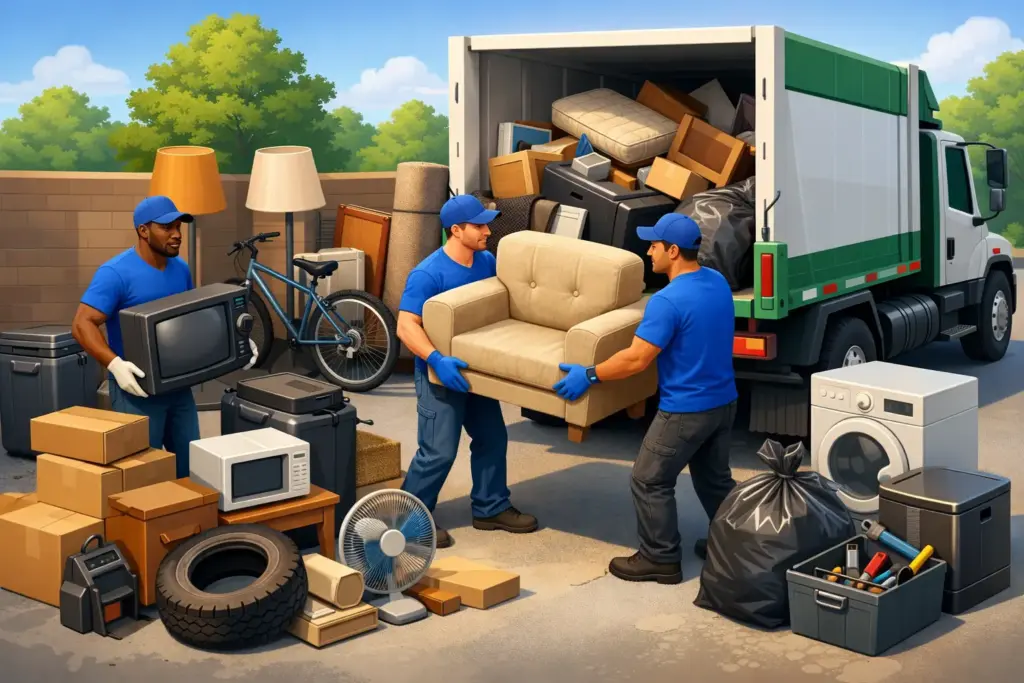
Your garage is packed, the old couch is dead weight, and there’s a mystery pile in the corner that somehow got bigger on its own. That’s usually when people ask, what items do junk haulers take? The short answer is: more than you think. The better answer is: it depends on the material, the weight, local disposal rules, and whether the item can be donated, recycled, or needs special handling.
Most junk hauling companies are built to remove bulky, awkward, hard-to-deal-with stuff that won’t fit in your weekly trash can. That includes furniture, appliances, mattresses, yard debris, renovation waste, and general household clutter. If two people can safely load it, there’s a good chance it can go.
What items do junk haulers take from homes?
For most residential jobs, junk haulers take the everyday headache items people don’t want to move, lift, or figure out how to dump. Furniture is one of the biggest categories. Couches, loveseats, recliners, dining tables, dressers, desks, bed frames, bookshelves, patio furniture, and filing cabinets are all common pickups.
Appliances are also routine, especially when they’ve reached the point where repair no longer makes sense. Washers, dryers, stoves, ovens, dishwashers, microwaves, water heaters, and refrigerators are often accepted. The catch is that some appliances need extra care because of refrigerants, weight, or awkward access. An old fridge in the garage is one thing. A fridge that has to come down a tight flight of stairs is another.
Mattresses and box springs are another frequent call. They’re bulky, annoying to transport, and many local disposal sites have special rules or added fees. The same goes for old TVs and electronics. Flat screens, monitors, printers, and computer towers are usually manageable, but they may need to be routed to a proper recycling stream instead of tossed in with general junk.
Then there’s the general clutter category – the bags, boxes, bins, and random loose debris that build up in attics, basements, sheds, and spare rooms. Toys, clothing, holiday decorations, old tools, broken storage racks, and mixed household junk are standard fare for a cleanout crew.
What items do junk haulers take from garages, yards, and remodel jobs?
Garages are where junk goes to get comfortable. That means haulers often remove stacked boxes, rusted shelving, lawn equipment, tires in some cases, leftover paint cans depending on condition and local rules, scrap wood, and piles of “I might use this someday” material that clearly lost its shot years ago.
Outside, the list gets even broader. Most crews take yard waste like branches, brush, leaves, sticks, shrub trimmings, fencing, and small amounts of dirt or sod. They’ll also haul off hot tubs, playsets, grills, trampolines, and broken sheds if they’re already taken apart or if light demolition is part of the service.
For remodels and contractor cleanup, junk haulers often remove construction debris such as drywall, lumber, cabinetry, flooring, tiles, carpet, vanities, countertops, and demolition scraps. This is where volume and weight matter a lot. A truck full of old cushions is very different from a truck full of concrete chunks. Both take up space, but one is much harder on labor, loading time, and disposal costs.
What junk haulers usually won’t take
This is where the nice clean answer turns into a real-world answer.
Most junk haulers will not take hazardous waste, or they’ll only do it under very specific conditions. That typically includes chemicals, wet paint, motor oil, gasoline, propane tanks, pesticides, solvents, asbestos, medical waste, and anything flammable, toxic, or regulated. Those items usually require a county drop-off site or a specialty disposal service.
Some companies also limit what they’ll accept when it comes to extremely heavy materials. Concrete, brick, dirt, gravel, roofing shingles, and full pallets of debris may be accepted only in small amounts or priced separately. It’s not because the crew is being difficult. It’s because weight limits are real, landfill rules are real, and overloaded trucks are a bad idea for everybody.
There can also be restrictions around car parts, batteries, pianos, pool tables, gun safes, and anything that takes special equipment or extra manpower. Some haulers will absolutely take these items, but they’ll want photos first so they can quote the job correctly.
The big rule: if it needs special disposal, say so upfront
If you want the job to go fast and the price to stay accurate, don’t play surprise junk. Tell the company exactly what’s in the pile. If there’s a fridge, say there’s a fridge. If there are paint cans, old gas cans, or a cracked TV mixed into the load, mention that too.
A good junk hauling company would rather know what they’re walking into than show up and discover three items that can’t legally go on the truck. Photos help a lot. They save time, reduce back-and-forth, and make it easier to flag anything that needs a special disposal plan.
What affects whether an item is accepted?
The biggest factors are safety, disposal regulations, size, and labor. If an item is too hazardous, too heavy, or too complicated to remove safely without the right prep, it may be declined or quoted differently.
Access matters too. A sectional on the curb is easy. The same sectional wedged into a third-floor apartment with tight turns and no elevator is a very different job. Some companies charge more for long carries, stair carries, bagging loose trash, or tearing down items before loading them.
Condition also matters. Clean furniture in usable shape may be donated when possible. Furniture that’s soaked, infested, torn apart, or heavily soiled is usually disposal-only. The same item can take two very different paths depending on whether it still has life left in it.
Donation and recycling change the answer
When people ask what items do junk haulers take, they usually mean, “Will you get this out of my house?” But there’s a second question behind that one: “Where does it go?”
A solid hauling company doesn’t treat every item like landfill material. Appliances, metal, electronics, cardboard, and usable furniture often have recycling or donation options. That’s good for the environment, and it can also feel a lot better than sending everything straight to the dump.
That said, recycling and donation are not magic words that fix every problem. A stained mattress is still a disposal issue. Broken particleboard furniture doesn’t suddenly become donation-ready because it used to be expensive. Recyclable items still have to meet facility requirements, and donation centers can be picky about condition.
A practical way to tell if junk haulers will take your stuff
If you’re standing in your house trying to guess, use this simple test. If the item is non-hazardous, can be lifted by a crew without special industrial equipment, and normally goes to a landfill, recycling center, or donation facility, it’s probably a yes.
That covers most household junk, old furniture, appliances, yard debris, and light construction waste. If the item contains chemicals, fuel, bodily fluids, refrigerants, or major structural weight, it moves into “ask first” territory.
This is also why photo-based quotes are so useful. They let a hauler spot the oddball stuff right away and tell you whether it’s included, extra, or not allowed.
When it makes sense to call a junk hauler instead of doing it yourself
If you’ve got one lamp and a broken chair, DIY might be fine. If you’ve got a mattress, a dead treadmill, three contractor bags of debris, and a water heater that weighs as much as your patience, hauling it yourself stops being a money-saver and starts becoming a Saturday killer.
Junk hauling makes the most sense when the load is bulky, heavy, time-consuming, or mixed. It also makes sense when disposal rules are confusing. A professional crew already knows what can go where, what needs to be separated, and what requires special handling.
That’s a big reason people in the Charlotte area use companies like Junk Punk. Fast pickup, straightforward volume-based pricing, and no-nonsense service beats borrowing a truck, making dump runs, and throwing out your back for the privilege.
Before you book, ask these two things
First, ask whether the company takes your specific items. Be direct and be complete. Second, ask what could change the price. Heavy debris, stairs, disassembly, long carries, and special disposal items are the usual suspects.
That quick conversation can save you from confusion on pickup day. It also helps the crew show up ready to work, which is the whole point.
If you’re still wondering whether your pile qualifies, the safest answer is this: most junk haulers take a lot more than people expect, but the weird stuff deserves a quick heads-up. Send a photo, ask the question, and let the pros tell you yes, no, or yes-but-here’s-the-deal.